


Photographer Raghu Rai (1942–2026)
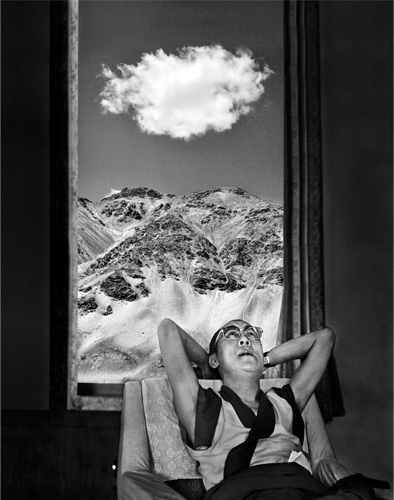
The Dalai Lama. Ladakh, India. 1976. © Raghu Rai / Magnum Photos
“If your heart gets touched by a movement or a specific thing happening, it will touch other people’s hearts.”
- Raghu Rai
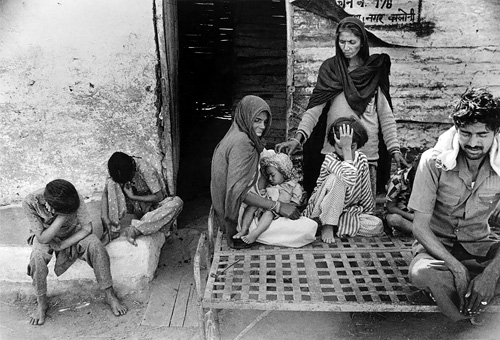
A family suffering from serious eye and lung damage. Bhopal, India. 2002. © Raghu Rai / Magnum Photos
Unlike many of his photojournalist colleagues, Rai spent the majority of his career capturing one place, his native country, where “the variety of subjects [...] were endless,” he wrote.
“Over the centuries,” he adds in Reflections in Color, “so much has melded into India that it’s not really one country; it’s not one culture. It is crowded with crosscurrents of many religions, beliefs, cultures and practices that may appear incongruous. But India keeps alive the inner spirit of her own civilization with all its contradictions.”
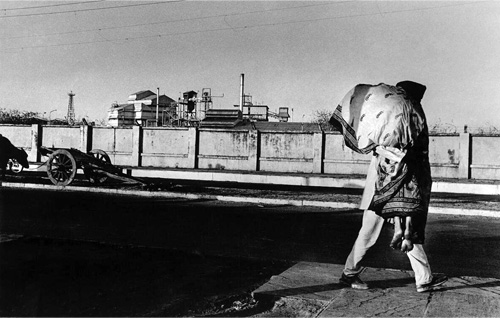
A man carries the body of his dead wife past the deserted Union Carbide Factory, the source of the toxic gas that killed her the night before. Bhopal, India. 1984. © Raghu Rai / Magnum Photos
Across his prolific career, he published more than 18 books, including India (1988), My Land and its People (1997), The Sikhs (2001), Mumbai/Bombay: Where Dreams Don’t Die (2010), Exposure: A Portrait of Corporate Crime (2002), Raghu Rai’s India Reflections in Black & White (2007), Taj Mahal (2011), and Picturing Time: The Greatest Photographs of Raghu Rai (2015).
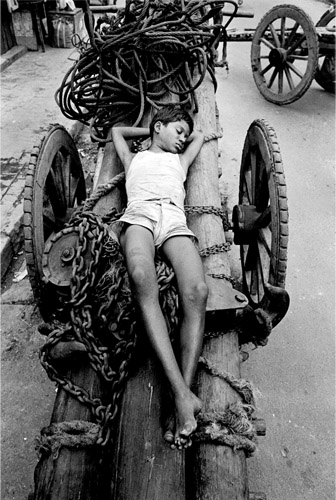
A child labourer takes a nap. Calcutta, India. 1989. © Raghu Rai / Magnum Photos
“[Whether photographing the] common man, or Mother Teresa, or Indira Ghandi, or any political personality, I have to remain me, myself, as a sensitive, responsible human being,” he said in an interview with India Art Fair.
“You see, over the years, you develop a kind of discipline, that your steps are no less and no more, just enough to reach the situation at a distance which has its sanctity. And then no matter who comes in front of your camera, you can capture the aura, the inner spirit of the person.”
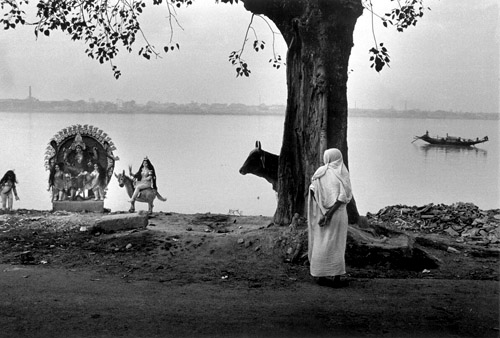
A cow and deities on the banks of the Hooghly River. Kolkata, India. 1987. © Raghu Rai / Magnum Photos
Rai won numerous awards and international recognition for his decades of visual reportage. For his coverage of the Bangladesh Liberation War, Rai was awarded the Padmashree in 1971, one of India’s highest civilian awards ever given to a photographer. His 1992 National Geographic cover story, “Human Management of Wildlife in India” won him widespread critical acclaim. In 2009, the French Ministry of Culture awarded Mr. Rai the Order of Arts and Letters, which recognizes eminent artists and writers. In 2017, he won a lifetime achievement award from the Indian government.

|
Black Stone Cherry |
LATEST GALLERY IMAGES
Samm Henshaw 
Jessie Ware |
|
|