


Photographer Raghu Rai (1942–2026)
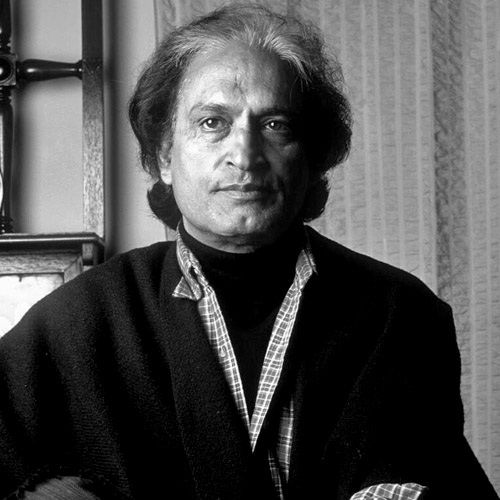
Raghu Rai. © Magnum Collection
Remembering Raghu Rai
Honoring the life of Magnum photographer, Raghu Rai, who passed away on April 26, 2026 at the age of 83
https://www.magnumphotos.com/newsroom/remembering-raghu-rai/
It is with great sadness that we announce the passing of beloved Magnum photographer Raghu Rai, who died on April 26, 2026 in Delhi at the age of 83. For 60 years, Rai was instrumental in chronicling Indian culture, spirituality, political conflicts, and some of the world’s most significant figures, leaving behind a prolific body of work as one of India’s most recognized photographers.
With a profound compassion and humanity, Rai dedicated his life to photographing the world around him and the elusive passage of time. Using photography as an extension of the heart rather than the eye, his aim, as he wrote in his 2015 book Picturing Time, was to capture “life’s longing for itself.”
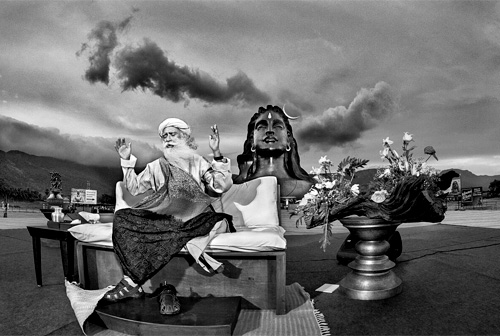
Sadhguru talking to the devotees, Isha Foundation. Coimbatore, India. 2017. © Raghu Rai / Magnum Photos
Born in 1942 in the small village of Jhhang, which is now part of Pakistan, Rai first started working for the government as a civil engineer. In 1965, on a trip to Delhi to visit his older brother, S. Paul, an accomplished photographer, an unexpected discovery unfolded. “One day one of his friends turned up and he was planning to go to his village to take photographs. Since I was doing nothing, I said, ‘Why don’t you give me a small camera and I’ll go along and take some pictures,’” he recalled in an interview on NDTV.
One of the first photographs Rai took that day was of a baby donkey, which his brother sent to the Times in London. The image was published, changing the trajectory of Rai’s life and career.
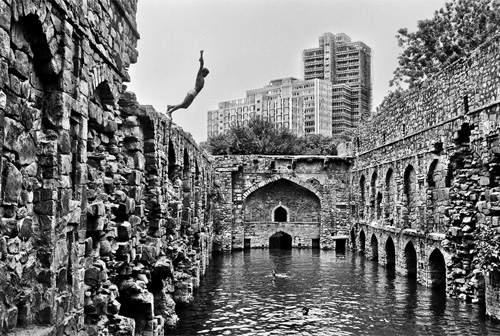
Ugrasen Baoli. Delhi, India. 1971. © Raghu Rai / Magnum Photos
“Each time I viewed the world through the lens, I felt all my energies, my concentration, were focused on what I was seeing.”
- Raghu Rai
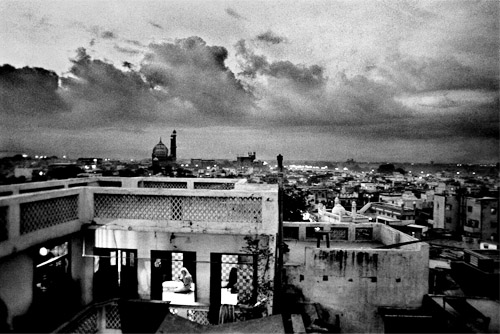
Evening prayer. Mosque Jama Masjid. Delhi, India. 1982. © Raghu Rai / Magnum Photos
“Above all,” he recalled in his book Delhi about first discovering photography, “what fascinated me about the camera, was that each time I viewed the world through the lens, I felt all my energies, my concentration, were focused on what I was seeing. Through this instrument, I found I could take a closer look at the world around me.” One of his earliest images won the Nikon International Contest, allowing him to acquire professional wide angle and telephoto lenses for the first time.
The same year, he moved to Delhi and took a job at the Hindustan Times, before joining The Statesman newspaper in 1966, where he worked for a decade as chief photographer. During this period, in 1970, he captured his first image of Mother Teresa in Calcutta, where she ran her order, Missionaries of Charity. Mother Teresa had given Rai permission to photograph her in prayer on Easter Sunday, as long as he sat in one place so as not to disturb the peace.
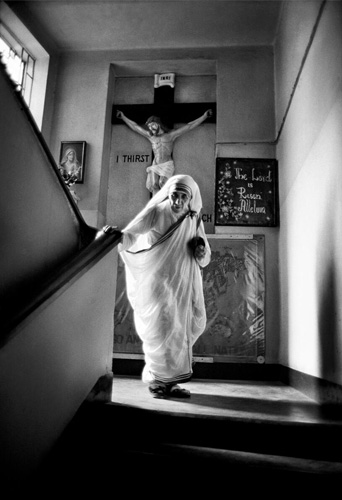
Mother Teresa. India. 1970. © Raghu Rai / Magnum Photos
Rai recalls this moment in the Magnum collection Contact Sheets: “Mother took me into the chapel and made me sit next to her, and went into prayer and then meditation. I needed a frontal position to capture that moment of connectivity. Despite my commitment, I was restless, so I walked around and took all the desired photographs, then the prayers were over and I came down the steps and waited for Mother…here she arrives. [...] I folded my hands, ‘Mother, forgive me for not being able to keep my promise.’ She held both my hands, looked into my eyes and said, ‘God has given you this assignment. You must do it well.’”
He would extensively photograph Mother Teresa’s work later in 1979, alongside the sisters of her order as they cared for infants, the elderly, and those living in extreme poverty. His images were collected in the books Mother Teresa: Faith and Compassion and A Life Dedicated.
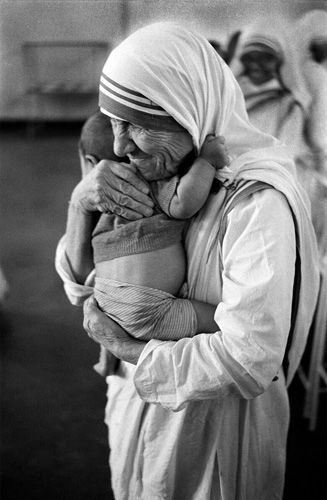
Mother Teresa in Gauhati, visiting a childrens’ home. India. 1979. © Raghu Rai / Magnum Photos
In 1971, Rai witnessed and extensively documented the Bangladesh Liberation War, an armed conflict between Bengali nationalists in East Pakistan, now Bangladesh, where protestors demanded Bengali independence, and the Pakistani government in West Pakistan, who launched a military crackdown on Bangladeshi nationalists and committed widespread violence against civilians. India’s involvement in backing the civilian insurgents against West Pakistani troops led to the India-Pakistan War.
The conflicts resulted in the deaths of between 300,000 and 3,000,000 people and the displacement of tens of millions of people from what is now Bangladesh. Rai’s sensitive photojournalism captures the throes of the war, from the extreme distress of Bangladeshi refugees to the final cessation of the nine-month conflict, establishing the country of Bangladesh.
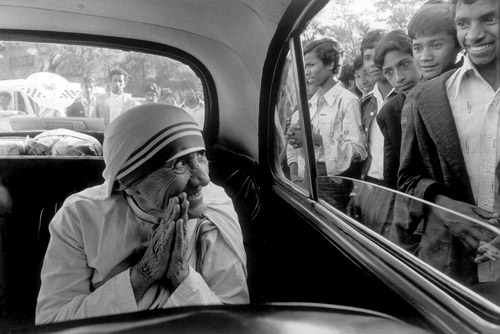
Mother Teresa being greeted during a visit to one of her missions. Shillong, India. 1989. © Raghu Rai / Magnum Photos
At his first major exhibition in 1972 at Gallery Delpire in Paris, featuring images from the Bangladesh Liberation War, Rai met Henri Cartier-Bresson, who was impressed with his work. “When I got back home,” he said at India Art Fair in 2021, “I got a letter from Magnum saying that Cartier-Bresson, a founding member, had nominated me to join the group. I was only five years into the field! I was so scared that I did not reply.” Five years later, in 1977, he rediscovered the letter and accepted the invitation, becoming the first Indian photographer associated with the collective, and remained involved in the agency until his death.
Rai left The Statesman in 1976 to work as picture editor for Sunday, a weekly news magazine published in Calcutta.
|
Beth Nielsen Chapman |
LATEST GALLERY IMAGES
Samm Henshaw 
Jessie Ware |
|
|